Yountville veterans fear Trump’s cuts are coming
Residents of the Yountville Veterans Home are bracing for potential ripple effects of deep federal cuts to the Department of Veterans Affairs under President Donald Trump’s second term.
The Trump administration, under the Department of Government Efficiency (DOGE) initially led by Elon Musk, has proposed sweeping cuts to the VA’s $210.9 billion budget, framing it as a push for fiscal responsibility.
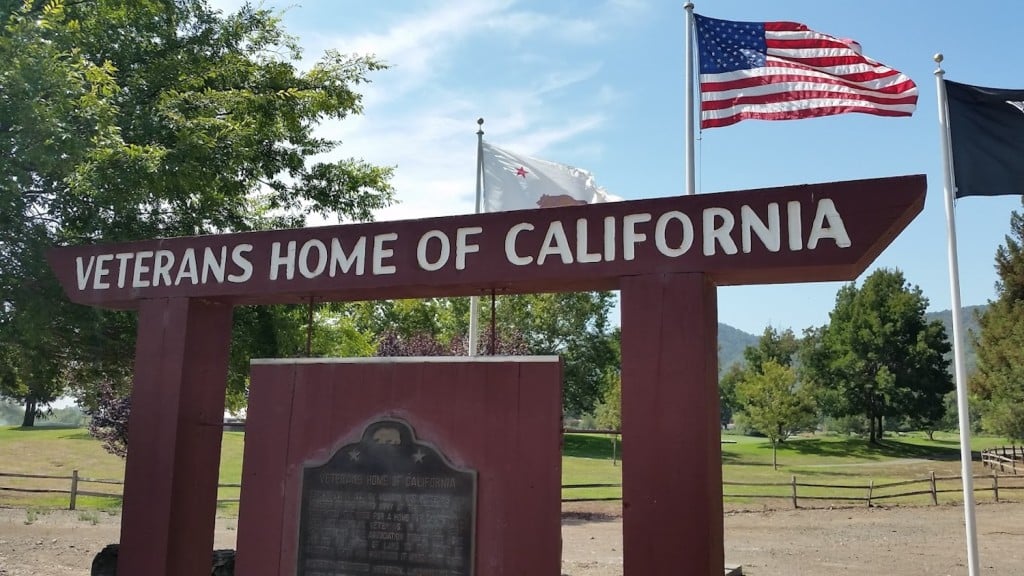
“There are more questions than answers right now,” Don Devereux, a resident of the Yountville home said earlier this spring, “Veterans here are feeling anxious about potential federal budget cuts being pushed by Trump, Musk and others in Washington.”
This week Devereux added that when he made that statement, there was a lot of underlying anxiety with the veterans in Yountville, “I wish that the people running this place were taking a more active role to keep everyone informed.”
Nationwide, damage is mounting: contracts for service-disabled veteran-owned businesses scrapped, vital home purchasing programs axed and VA diversity and inclusion efforts dismantled, threatening the very support systems veterans rely on.
Yountville’s Veterans Home is operated by the state through the California Department of Veterans Affairs (CalVet); how the federal cuts could impact the home remains unclear.
CalVet spokesperson Josh Kiser said that the Trump administration’s VA cuts will not affect the Yountville Veterans Home.
“We have not experienced any changes so far during the Trump administration,” Kiser said in an email, adding that the state agency did not anticipate changes or cuts to the home.
While the Yountville Veterans Home has yet to be directly impacted, some residents fear it’s only a matter of time. The administration in March announced plans to slash a total of 83,000 positions. That is about 17% of the agency’s workforce.
“My own impression is that the biggest harm is not the people locked in with VA benefits,
It seems to be happening at the level of the intake process for benefits, for people applying it will be slower to get into the system because of staff cuts. I think it will get slower and more difficult for new applicants to get benefits,” Devereaux said.
He added that living in at the Veterans Home in Yountville, and in the Napa Valley in general, is a bit like living in a bubble, within a bubble. Adding that because it is a state-run facility, the residents there are somewhat immune to the federal cuts. However, there is much that is unknown. “We are living in limbo, we have a sense that the other shoe hasn’t dropped, so we are waiting to see what happens… But obviously, there is some concern,” he concluded.
The largest veterans home in California
California is home to the largest veteran population in the country, with more than 1.8 million veterans. The Yountville facility currently houses nearly 580 residents, many of them disabled veterans of World War II and the Vietnam War.
Of California’s eight veterans homes, none come close to the scale of the Yountville campus. With a current budget topping $130 million, the facility alone devours nearly a third of CalVet’s entire $404 million budget. That breaks down to $224,000 per Yountville resident each year.
Set on a sweeping 615-acre estate, the Yountville Veterans Home is the largest in the nation and boasts more than 100 buildings and even its own golf course. The state’s next-largest facility, in Chula Vista, sits on just 30 acres, a stark contrast in size, scope and spending.
While the Yountville Veterans Home is state-funded and does not directly operate on any federal VA funds, according to Kiser, most of CalVet’s annual revenue is dependent on federal funding.
In the 2022–23 fiscal year, nearly $78 million, or about 60% of CalVet’s total revenue, came from a federal “per diem” subsidy to offset the state program’s operational costs across its veterans’ homes.
The program, outlined in CalVet’s 2025 Master Plan, provides daily payments from the federal government to reimburse some costs of running state-operated veterans homes such as Yountville’s home. The federal payments range from $55 to $127 per day for each veteran, depending on each veteran’s level of care.
CalVet’s revenue also includes a combined $29 million in Medicare and Medi-Cal reimbursements and $20 million from resident room and board fees calculated on a sliding scale based on each resident’s level of care and monthly income, which often consists of retirement plans and service-connected benefits.
Concerns about VA cuts and possible changes to medical and Social Security benefits led Yountville Home residents to join the “Hands Off” protests in April, attended by more than 100 people.
“Almost all of us depend on one kind of VA pension or another,” said Jeff Williams, a Yountville Home resident and one of the protest organizers. “If our social security, VA disability, or income goes down, (CalVet’s) income goes down. That’s going to impact the services they can offer.”
Aaron Cadore, who oversees the county’s Veterans Service Office which assists military veterans and their families in navigating VA benefit claims and accessing various services said in an email there has been no immediate impact to local staffing or operations due to possible federal changes.
However, he noted that significant federal funding cuts could pose future challenges to local services.
Rep. Christopher Cabaldon, a Democrat representing California’s 3rd District and chair of the Senate Budget Subcommittee on Veterans Affairs, said in an email that lawmakers are preemptively advancing several protective measures.
“We’re considering a range of proposals to support our veterans,” he said, “including a possible state tax exemption on the first $20,000 in federal benefits, as well as increased funding for repair and rehabilitation projects at the Yountville Veterans Home and other sites across California.”
Many veterans also fear that federal changes and proposed funding cuts reflect a broader political shift and growing hostility toward marginalized communities.
A few days after Trump’s inauguration, the director of the Center for Minority Veterans, James Albino, was abruptly fired without explanation just weeks after the president’s inauguration. He led initiatives that addressed the needs of Black, Brown and LGBTQ+ veterans.
“Starting from day one, he went after my community,” said Yountville Home resident Jamie Neely, who is transgender. “He’s almost tried to make it illegal to be transgender. It’s popular to hate us in the Republican party. It really is… It doesn’t feel very good to be targeted that way.”
Mixed views about Trump
About 61% of military-affiliated registered voters said they supported Trump, while 37% backed Kamala Harris according to a survey conducted in September by the Pew Research Center.
Yountville Vets Home resident Don Kelso, 90, voted for Trump in 2016, 2020 and 2024, and said he trusts Trump’s plan despite skepticism.
“If federal jobs are cut, Trump has assured (us) that the service level will be maintained,” Kelso said. “I’m trusting him because he always does what he says. I’m assured if it does affect the service level that people will be hired back.”
“If not for VA care, I don’t know where I’d be,” said veteran George Chewning, a senior advisor at the Union Veterans Council, during a Democratic Steering and Policy Committee hearing in Washington D.C. last month. “I’m disgusted by the current administration’s attacks. This is the largest assault on veterans in our lifetime.”
“We’re vulnerable; deep cuts could seriously affect us,” Devereux said.