Napa County Master Gardeners: Meet the monkeyflowers
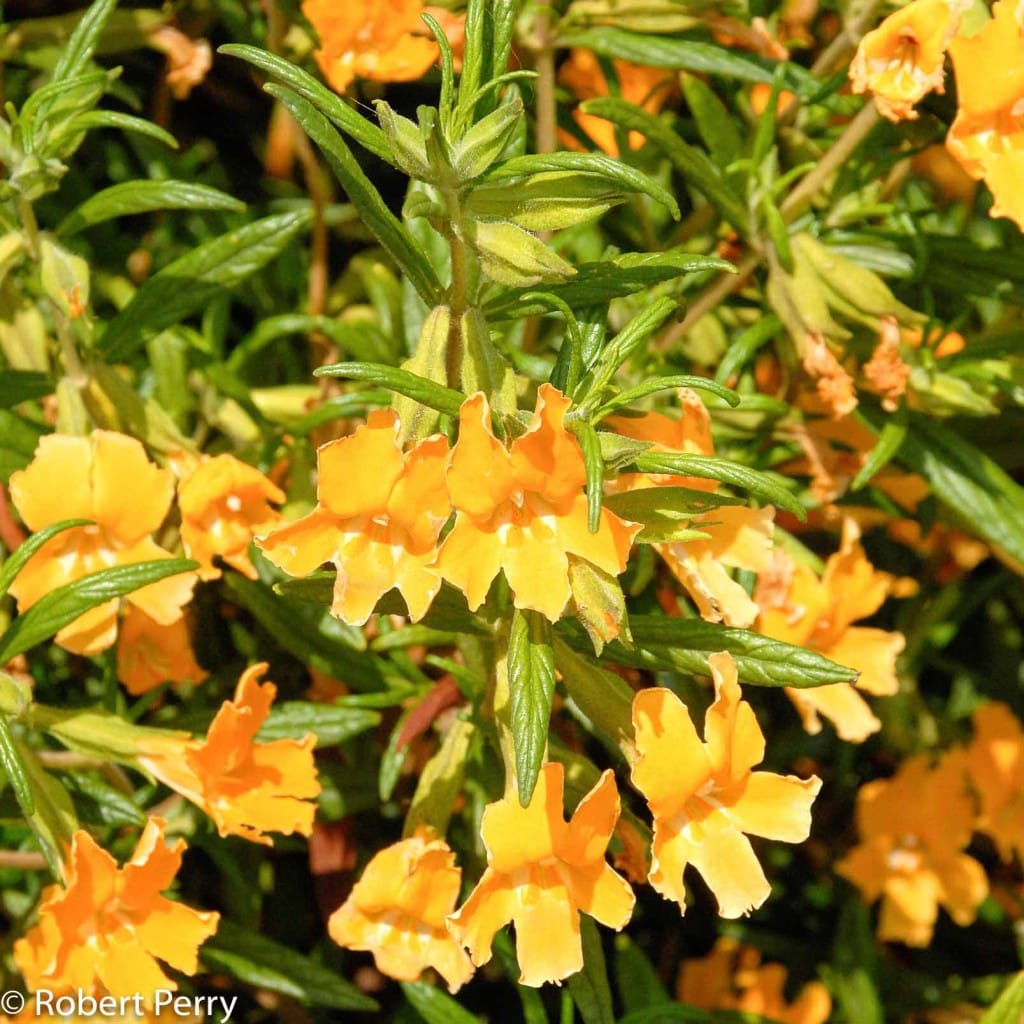
One of my favorite native plants is the sticky monkeyflower bush. It grows well in all types of soil but especially likes to be under oak trees. I have several of these plants growing in my garden and they seem to thrive without much water and in sun or shade. Hybridizers have developed monkeyflowers that bloom in a range of colors.
Diplacus aurantiacus is the plant’s botanical name but it is more commonly known as Mimulus. I notice most nurseries are still calling them Mimulus. Most of the species are perennials but they are not long lived.
The most common flower color is yellow. The plant is the food for the larval stage of both the checkerspot and common buckeye butterflies. Monkeyflowers are pollinated by bees and hummingbirds. I was surprised to learn that they grow in many parts of North America, Africa and Asia.
Sticky monkeyflowers owe the first part of their name to a resin in the leaves that helps them retain water and makes them drought tolerant. I’ve read that they are called monkeyflowers because the flower resembles a monkey face. I don’t see that, but I do find the flowers to be charming. They last for a long time, which makes them especially appealing.
Monkeyflowers are native to Southern Oregon and most of California. They are even planted at the San Diego Zoo. However, they do not do well in very dry climates. If you want to try them in a dry climate, plant them in full shade. The space between leaves and flowers will be farther apart when they are grown in shade.
I have been told that monkeyflowers grow in the mountains around Napa Valley although I have not seen them. They do not seem to be particular about soil.
If you want a second bloom, then be sure to cut the flowers back when they fade. Do so before they have a chance to go to seed. Cut them back to a node where new leaves can emerge. Once the plant sets seed, it thinks it is done for the year. Deadheading (removing spent blossoms) is important to the critters that feed on these flowers.
Monkeyflowers can be propagated from cuttings. Cut off a healthy growing tip 4 to 6 inches long. Strip off the bottom leaves and put the stem in a moist growing medium. I prefer a mix of sharp sand and pumice; it drains well but still retains moisture.
I tried to root monkeyflower cuttings in my cloner without success. Possibly the cloner’s continuous washing of the stem with water was not what this plant wants.
A cutting should root in about two months. If you tug gently and feel resistance, your cutting has rooted. After a few months, replant in a larger pot with well-draining potting soil and place in part sun.
While researching this article, I checked out what was available online. Naturally, I gave in to temptation. I am going to try to grow monkeyflowers from seed. I love propagation and these plants seem to be easy to grow. Instructions say to either plant the seeds outside to get winter chill or put them in the refrigerator for a few weeks to chill them.
In my refrigerator they will be next to native milkweed seeds which also need a winter chill. Once planted in a seed mix, they need sunlight to germinate.
After the seeds sprout, I will put the seedlings in my hothouse under grow lights. And of course I will report on what happens. I am hoping for a rainbow of colors.
Workshop: Join UC Master Gardeners of Napa County for a workshop on “Cool-Season Vegetables” on Saturday, Aug. 9, from 10 a.m. to noon, at UC Cooperative Extension, 1710 Soscol Ave., Napa, or on Sunday, Aug. 10, from 2 to 4 p.m. at Yountville Community Center, 6516 Washington St., Yountville. Now is the time to plan for a harvest in fall, winter and early spring. This hands-on workshop will help you understand which vegetables thrive in cool or even cold weather and why you need to start planting while the weather is warm. Register here for the Napa workshop. To register for the Yountville workshop, call the Yountville Recreation Department at 707-944-8712.
Tree Walk: Join UC Master Gardeners of Napa County for a docent-led tree walk of Fuller Park in Napa on Sunday, Aug. 10, from 10 to 11:30 a.m. Historic Fuller Park is an arboretum with many exotic and native trees planted over the past 120 years. Meet at the corner of Oak and Jefferson Streets in Napa.
Become a Master Gardener Volunteer: UC Master Gardeners of Napa County is now accepting applications for the class of 2026. Visit napamg.ucanr.edu for more information and register to attend a mandatory information session for applicants. Applications are due by 5 p.m. on Sept. 25.
Help Desk: The Master Gardener Help Desk is available to answer your garden questions on Mondays and Fridays from 10 a.m. until 1 p.m. at the UC Cooperative Extension Office, 1710 Soscol Ave., Suite 4, Napa. Or send your questions to mastergardeners@countyofnapa.org. Include your name, address, phone number and a brief description of the problem.