Napa County Master Gardeners: Affection for invasive lemon balm
While organizing some of my old newspaper columns, I came across one that declared my affection for invasive plants. In fact, I ranked them at the top of my plant pantheon, because for me, “invasive” can be synonymous with “easy to grow.” (Yes, I’m talking about you, passionflower.) Well, here’s another case where my frivolity has come back to haunt me.
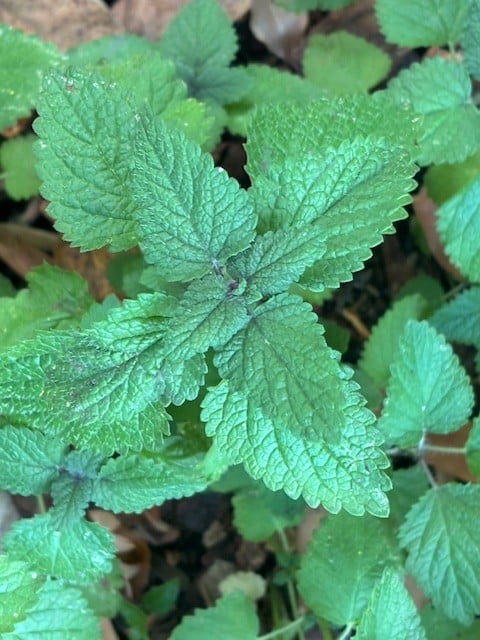
About 30 years ago I bought a beautiful lemon balm (Melissa officinalis) and plunked it in a large pot in a semi-shaded area. By the end of the summer, several plantlets had appeared in the surrounding area. I dug some of them up and gave them away and allowed the others to go forth and prosper.
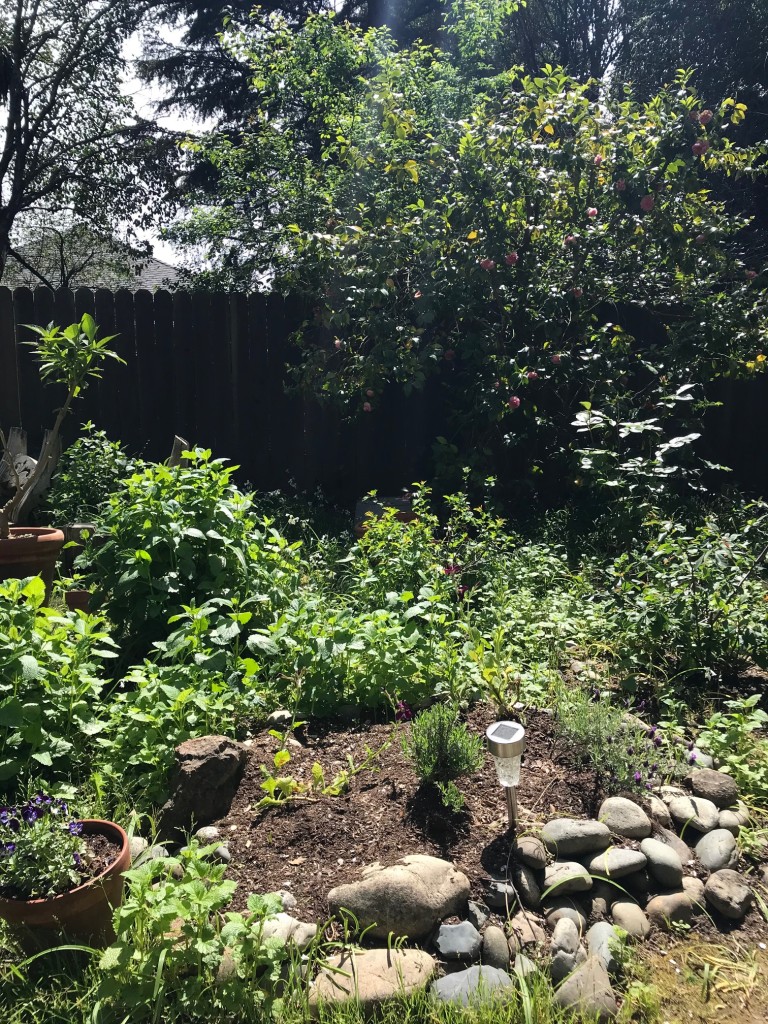
Pretty soon the wild onion had a rival for territory, but the lemon balm won because it has a longer growing season. The green mounds of heart-shaped, toothed leaves grew three feet tall, bore tiny flowers—which of course had seeds—and attracted bees, butterflies and hummingbirds. They made a charming tableau, and then they took over.
Everything in their vicinity had to adapt, meaning all the scented geraniums got leggy, and the lavenders had to stretch until they were practically horizontal to get enough sun. Lemon balm obscured the tiger lilies and competed with the roses for water. In fact, the lemon balm was bursting with rude health, to the detriment of other flowers. I wondered why it was so successful in my back yard.
Napa has the ideal climate for lemon balm, which is a member of the mint family. Our winters are mild, and even on the hottest days we can usually count on a cool evening breeze. My yard has plenty of organic matter (compost) in the soil, which lemon balm likes, although it grows in almost any kind of soil.
It can survive drought because we have cool nights and foggy mornings. While it prefers dappled sunlight, it grows in sun or shade—in other words, it can grow almost any place.
Most mints send out runners, but lemon balm flowers set seed, and those fly around everywhere, often carried by birds. Another reason for its success is that it doesn’t attract pests. The worst that can happen is the leaves might get discolored from overcrowding.
Native to the Mediterranean and Central Asia, lemon balm made its way to Europe and then to America in the 18th century. In those days, cooks valued it as a flavoring in jellies, cakes and drinks. I like it in fruit salad. Others dry it for potpourri or for stuffing pillows. Its scent was thought to have calming properties, and I think it does, until I am reminded that I need to thin all those plants one of these days.
The best way to control lemon balm is not to allow it to spread in the first place. Well, that ship has sailed, so I will have to dig out the plants. I did so once and more sprang up. Remember the myth about Jason and the dragon’s teeth? When planted, the teeth come back as warriors.
Research tells me that, with continued effort, the lemon balm will diminish over time. Or I could lay down layers of corrugated cardboard, compost and mulch (a process known as sheet composting) and quell the plant’s fertility that way. Foot traffic will inhibit growth, too. Maybe I will cut a new path through the biggest clump.
Since lemon balm is nearly impossible to eliminate once established, the best way to control it is to prune it before it sets seed. Forget the pruning scissors, just shear the tops. It’s faster.
Even though lemon balm has taken over my yard, I love the plant. Besides being easy to grow, it’s not poisonous, unlike foxglove and brugmansia, two of my favorites. Finally, it really is attractive, and it has a delightful fragrance, fresh and citrusy.
It’s a pleasure to sit in the yard after a weed-pulling session, admiring the lemon balm covered with humming bees. The only problem is that here is so much of it.
I went to a funeral a couple of years ago, and the widow came up to me, smiling, and said, “Cindy, I still have that lemon balm you gave me all those years ago.” I thought, “Wow, and she’s still speaking to me.”
Workshop: Join UC Master Gardeners for a workshop on “Catch the Rain: Slow It, Spread It, Sink It” on Saturday, October 4, from 10 am to noon, at Yountville Community Center, 6516 Washington Street, Yountville. Explore many strategies to catch rain at home and adapt to the climate’s natural rhythms. Register on the Yountville Community Center website; scroll down to Events and UC Master Gardeners for registration.
Tree Walk: Take a guided walk through Napa’s historic Fuller Park on Sunday, October 12, from 10 am to 11:30 am, with a UC Master Gardener docent. Discover some of the many exotic and native trees there and learn some park history. Meet at the corner of Oak and Jeffereson Streets. The walk is free but registration is required for each participant.
Help Desk: The Master Gardener Help Desk is available to answer your garden questions on Mondays and Fridays from 10 am until 1 pm at the University of California Cooperative Extension Office, 1710 Soscol Avenue, Suite 4, Napa. Or send your questions to mastergardeners@countyofnapa.org. Include your name, address, phone number and a brief description of the problem.