Las Posadas: Reliving a beloved Mexican Christmas tradition of faith, family and community
In Mexico, at the beginning of December, there is much joy, since we can feel that something is coming. Why all the excitement? What are the children getting ready for? Why are they decorating the streets with paper, lanterns, hay and decorative spheres?
Las Posadas are coming. This tradition begins on Dec. 16 and ends on Dec. 24. But just what are Las Posadas?
My parents told to me what the grandparents once told them: when Joseph and Mary were forced to report to another city during the census, Mary was already pregnant with the baby Jesus, and when they arrived in Bethlehem, after eight days on the road, at nightfall they had to go from inn to inn, asking for lodging. That is why this celebration, in which we relive their journey, is known as the “Posadas” the Spanish word for inns.
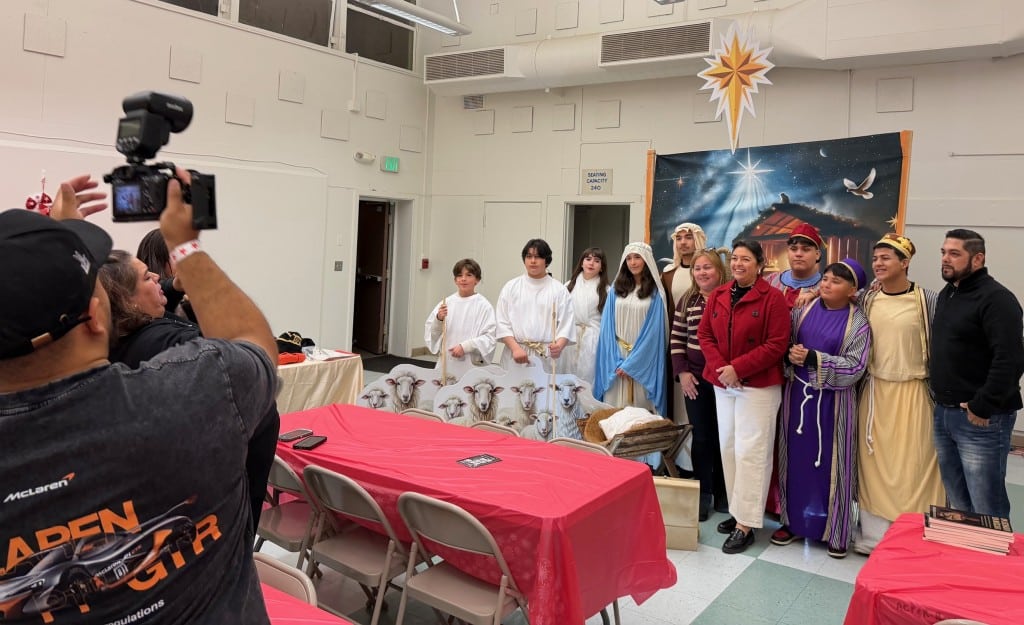
When I lived with my parents in Mexico City, it was up to me to organize several Posadas, and all the neighbors helped out. We decorated the entire street, and it looked so festive and happy that it became contagious. We would choose eight children to represent the travelers (Joseph, Mary, a pair of angels and some shepherds) and also a donkey. The children were thrilled and their parents proud. We would practice just a couple of times before the big event, since they already knew it by heart, having done this every year. We would also pick eight homes, one for each night.
The first “Posada” is celebrated on Dec. 16. We begin at the end of the street with the Peregrinos (travelers), Joseph walking, holding the donkey’s reins in his hand, with Mary mounted on the donkey, and a pair of angels and several shepherds following them, along with the rest of the people, singing and lighting the way with candles.
When we arrive at the indicated house, we knock on the door, asking for lodging or posada, and singing: “In the name of heaven we ask you for lodging, as my beloved wife cannot walk.”
The hosts answer back, singing: “This is not an inn, so continue on, as I cannot open for you; do not be malicious.”
At first, supposedly no one knows who is asking for lodging, and when they realize it is Joseph and Mary, they open the doors, offering them lodging. We enter a patio decorated with paper lanterns, coiled confetti, hay and a piñata in the middle. They give us tamales, buñuelos, atole de chocolate, vanilla or fruit that is in season, as well as punch made from different fruit: Prunes, cinnamon, sugar cane, oranges, raisins, and for the adults, a bit of rum.
After eating and chatting a bit, it is time to break the piñata! Generally, the piñatas are made by the same family, but in different shapes; traditionally, this one is a star. The children jump for joy and all of them want to break it. Each one who takes a swat at the piñata must be blindfolded first, and then we spin him around a few times to make him a little disoriented, and he is not to break it while we sing … “Dale, dale, dale, no pierdas el tino, porque si lo pierdes, pierdes el camino.” (“Give it a good one and don’t miss, or you will lose your way.” )
When one of the children finally breaks it, they all pile onto each other to grab the candies, goodies and fruit. If the piñata is for the grownups, instead of candies there might be presents or a surprise —flour!
And that’s not all.
There’s music to dance with your friends, aunts and uncles, cousins and grandparents. Everyone dances! And when one has to leave, the hosts give each child an aguinaldo, a little bag filled with candies that are only sold during this season. This is repeated during the eight days of the Posadas.
The last Posada is on the 24th of December, Nochebuena, or Christmas Eve. Generally, this day is celebrated with the family, grandparents and close friends in one’s own home. On “Nochebuena”, we still ask for “Posada,” and upon entering the house, we take turns cradling the baby Jesus doll. A new stage begins in your life, free of rancor, full of happiness. Happiness that is reflected around us with the family and friends… Wouldn’t you like to go to a “Posada”?
¡LAS POSADAS!
LA TRADICIONAL FIESTA DE LA NAVIDAD MEXICANA
Por Teresa Foster
En México, a principios de diciembre, se siente un ambiente diferente, un ambiente lleno de alegría. ¿Por qué toda tanta emoción? ¿Para qué se preparan los niños? ¿Por qué decoran las calles con faroles de papel de colores, heno y esferas decorativas? … Están llegando “Las Posadas”, tradición que comienza el 16 de diciembre y termina el 24 del mismo mes, pero ¿Qué son Las Posadas?
Es una hermosa costumbre que mis padres me enseñaron lo que a su vez les enseñaron los abuelos: “Cuando José y María viajaron para ir a registrarse al Censo a su ciudad de origen, María estaba embarazada con el niño Jesús, y en su camino a Belén, después de ocho días viajando y ya al anochecer tuvieron que ir de posada en posada, pidiendo alojamiento. Por eso, esta celebración, en la que revivimos su peregrinaje, es conocida como “ Las Posadas”, la palabra española para “Alojamiento.”
Cuando viví con mis padres en la ciudad de México, me toco organizar varias “Posadas” y todos los vecinos participaban. Decorábamos toda la calle y quedaba tan alegre y festiva que era contagioso el ambiente.
Elegíamos ocho niños para representar a los peregrinos (José, María, un par de Ángeles, y algunos pastorcitos), ah y también un burro; que la mayoría de las veces conseguíamos un burro de verdad. Los niños estaban encantados y sus padres se sentían orgullosos. Practicamos solo un par de veces antes del gran evento, ya que ellos sabían los versos de memoria ya que esto se hace cada año. También se elegían ocho casas, una para cada Posada.
La primera “Posada” se celebra el 16 de diciembre, comenzando al final de la calle con los “Peregrinos”; José caminando, con las riendas del burro en la mano, María montada en el burro, un par de ángeles y varios pastores tras ellos, junto con el resto de la gente, cantando e iluminando el camino con velitas. Cuando llegamos a la casa indicada, tocamos a la puerta, pidiendo alojamiento, o “Posada” y cantando: “En nombre del cielo os pido posada, pues no puede andar mi esposa amada.” y la respuesta de los habitantes era cantando “Aquí no es mesón, sigan adelante, yo no puedo abrir, no sea algún maleante.”
Se supone que ellos no saben quién está pidiendo posada, y cuando se dan cuenta que es José y María abren las puertas ofreciéndoles alojamiento. Al entrar a la casa encontrábamos un patio adornado con faroles de papel de colores, serpentinas, heno y una piñata en el medio. La familia dan de comer tamales, buñuelos, atole de chocolate, vainilla o frutas de la temporada; así como ponche de frutas de ciruelas pasas, canela, caña de azúcar, mandarina, tejocote, uvas pasas y para los adultos, un chirrin de Ron!
¡Después de comer y charlar es hora de romper la piñata! Generalmente, las piñatas están hechas por la misma familia, pero en formas diferentes, tradicionalmente, es una en forma de estrella. Los niños saltan de alegría y todos ellos la quieren romper. Cada quien toma su turno dándole a la piñata con un palo, pero primero se le debe de vendar los ojos y luego girarlo algunas cuantas veces para desorientarlo. El niño intenta romperla mientras cantamos…”Dale, dale, dale, no pierdas el tino, porque si lo pierdes, pierdes el camino.”
Cuando finalmente se rompe, todos corren para agarrar los dulces, golosinas y frutas. ¡Si la piñata es para los adultos, en lugar de dulces habrá regalos o una sorpresa… Harina! Y eso no es todo. Hay música para bailar con los amigos, tías, tíos, primos y hasta con los abuelitos. ¡Todo el mundo baila! Ya cuando se termina la posada los anfitriones obsequian a cada niño su “Aguinaldo”, que consiste en una pequeña bolsa llenada de dulces llamados “colación” que sólo se venden durante esta temporada. Esto se repite durante los ocho días de las “Posadas.”
La última “Posada” es el 24 de diciembre, “Nochebuena”, o la víspera de Navidad. Regularmente este día se celebra en familia, con los abuelos y amigos cercanos. En la “Nochebuena” o sea la ultima posada, la noche en que se celebra el nacimiento del niño Jesús, pedimos “Posada”, y al entrar en la casa, tomamos turnos para mecer al niño Jesús, (tradicionalmente las familias tiene orgullosamente una figura preciosa que del niño Jesús) y nos damos el abrazo con el cual iniciamos una nueva etapa en nuestras vidas, libres de rencor y lleno de felicidad, felicidad que se refleja alrededor de nosotros con nuestra familia y amigos… ¿Le gustaría ir a una “Posada?”
Teresa Foster siempre se ha mantenido muy activa en su comunidad, ella es la anfitriona del show de Televisión Charlando con…..Teresa Foster” el cual sale al aire en varias estaciones comunitarias en del norte de California. Su objetivo es mantener bien informada a la comunidad latina. Ella afirma: “Si continuamos con nuestras costumbres, raíces y lenguaje, no sólo nos seguimos enriqueciendo a nosotros mismos y nuestra comunidad, pero también pasamos esta valiosa herencia a nuestros hijos.”