In Scotland’s gardens, a Napa arborist finds lessons in letting nature lead
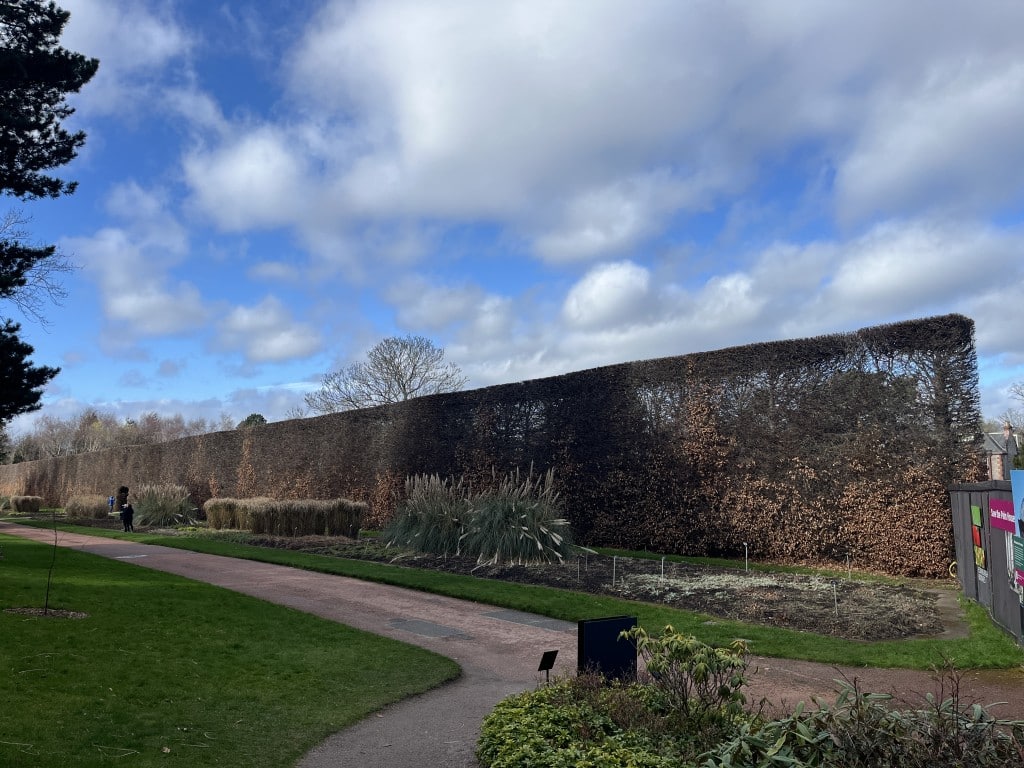
My recent visit to the Royal Botanical Garden in Edinburgh, Scotland offered a pleasant reminder of how climate shapes not only what we grow, but how we maintain and design landscapes. In Napa Valley, much of my work as a garden consultant centers on water conservation, irrigation efficiency and helping plants survive long dry summers.
In Scotland, moisture was obviously abundant, and the landscape reflected a different approach, shaped by consistent rainfall and cooler temperatures. Unfortunately, the glasshouses were closed during my visit, but the outdoor landscape alone provided valuable insight. This kept my focus on plants that spend their entire life in the Scottish climate.
One of the most revealing differences was not necessarily the plants themselves, but the maintenance performed. With consistent moisture, moss becomes the dominant surface growth, creeping everywhere across the landscape and creating safety concerns. It seemed to be growing on anything and everything. People were scattered throughout the gardens scraping moss from pathways with hoes.
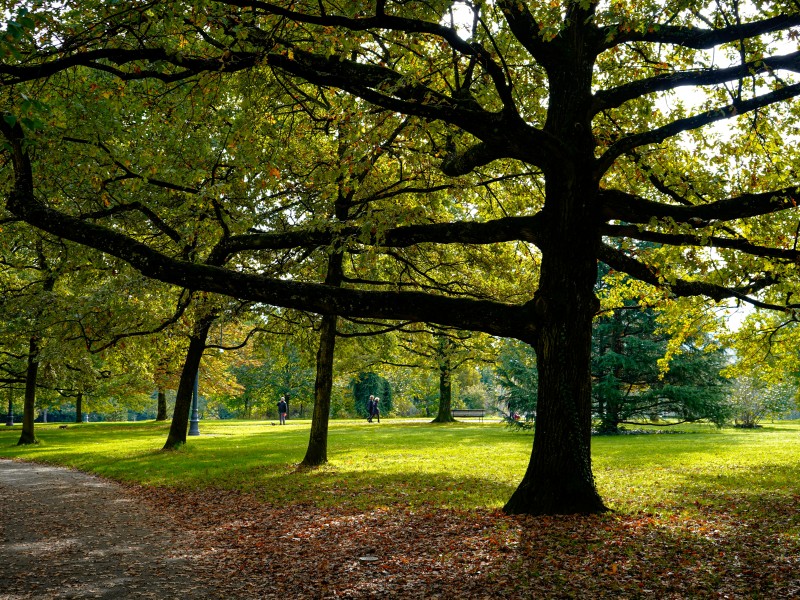
As an arborist, I was surprised by the scale of mature trees, particularly the sweet chestnuts. Many reached heights of 80 feet or more, matching the height of the “exotic” redwoods in the botanical garden. While observing one of these towering chestnuts, I witnessed a team of tree climbers actively pruning in the canopy. The tree easily surpassed 100 feet, and the crew moved with the same deliberate rhythm I’ve seen countless times in the United States.
From the ground, I could hear the familiar call-and-response between climber and ground crew. The only difference was a Scottish accent. Otherwise, it could have been a pruning crew in Napa, Sonoma or anywhere in California. The communication, pacing and teamwork were identical. It was a lovely reminder that arboriculture has a shared professional language.
Whether in Scotland or California, arborists follow practices set by the International Society of Arboriculture (ISA) and rely on the same communication, trust and awareness to work safely in large trees. Observing this teamwork reminded me how consistent the craft of arboriculture is, regardless of geography.
The pruning practices I saw in the Edinburgh Botanical Garden reflected restraint. Rather than aggressively shaping or modifying a tree, the work focused on safety and longevity. The canopies retained their natural form, suggesting a long-term preservation mindset rather than short-term control.
I also noticed that trees that had previously died were pruned for safety but left largely intact. Their trunks and partial canopies provide habitat for birds, insects and fungi. Instead of removing trees entirely after failure, the garden crew allowed them to transition into ecological assets, reinforcing a long-term ecological perspective.
Another striking feature was the abundance of deciduous hedges, some pruned to heights rivaling nearby trees. These living walls create structure and enclosure throughout the garden. In Napa Valley, I often avoid recommending deciduous plants for hedges. When they drop their leaves in the winter, they can appear lifeless, and my clients tend to prefer evergreen options for privacy. In Edinburgh, however, the hedges maintain strong architectural lines even when dormant. Seasonal change seems to be part of the design rather than a limitation.
True seasonality was particularly evident in the Gunnera that I saw. Known for massive, dramatic leaves, the plants were reduced to mulched crowns, soon to unfurl spring growth. In California, we are lucky enough to rely on many plants for year-round presence. In Edinburgh, winter seemed to reset the landscape more completely.
The wildlife was surprisingly similar although the pigeons were strikingly large, closer in size to small ducks than the pigeons we typically see in Napa Valley. Watching them move slowly across lawns and pathways was a delight.
While Edinburgh and Napa Valley differ dramatically, the core principles of gardening seem to remain consistent: observe carefully, respond to conditions and work with natural systems. Travel has a way of sharpening that perspective and visiting the Royal Botanic Garden Edinburgh reinforced my conviction that good horticulture begins with understanding your environment.
Library Talk: Join UC Master Gardeners of Napa County and Napa County Library for a free talk on “Growing Cown: Our Field Test Favorites” on Thursday, May 7, from 7 to 8 p.m. via Zoom. Master Gardeners experimented with corn in home gardens and share their findings. Register here.
Tree Walk: Join UC Master Gardeners of Napa County on a free guided tree walk in Napa’s Fuller Park on Friday, May 8, from 10 a.m. to 11:30 a.m. Discover some of the many exotic and native trees in this historic park. Meet at the corner of Jefferson and Oak. Space is limited and registration is required for each participant.
Workshop: Join UC Master Gardeners of Napa County for a workshop on “Worm or Backyard Composting” on Saturday, May 16, from 10 a.m. to noon at Napa Valley College, Upper Valley Campus, 1088 College Ave., St. Helena. Learn the fundamentals of worm composting, eliminating yard waste and turning your trimmings into rich soil. Those taking the backyard composting portion may purchase a discounted compost bin for $20. Registration required.
Help Desk: The Master Gardener Help Desk is available to answer your garden questions. Use our online Plant Problem Help Form or email us at mastergardeners@countyofnapa.org. Include your name, address, phone number and a brief description of the problem. You can also visit us in person on Mondays and Fridays from 10 a.m. until 1 p.m. at the UC Cooperative Extension Office, 1710 Soscol Ave., Suite 4, Napa.