From volunteers to co-owners: Calistoga’s promotoras build a future of fair pay
Lee esta historia en español y más noticias locales, suscríbete a nuestro boletín Conéctate Napa County.
For nearly half a decade, Olga Pimentel has dedicated herself to reaching Calistoga’s most vulnerable residents: immigrants, Spanish speakers, those without transportation and community members living so far on the margins that even grassroots organizations often struggle to connect with them.
Pimentel’s voluntary efforts, whether helping at food drives, greeting neighbors at community events, making home visits, or walking families through local resources showcase the heart of what promotoras do.
As trusted community health workers, they may not hold medical licenses, but through specialized training they share life-saving information, connect families to critical services and build the cultural and language bridges that make care possible.
For about 15 years, Calistoga’s promotoras have carried out their essential outreach as volunteers, without pay. But thanks to the Promotora Cooperative Initiative, a pilot project launched by the Latino Community Foundation (LCF), that is changing. The effort aims to empower Latina women to build small cooperative businesses that not only recognize their vital contributions but also ensure they are fairly compensated for their work.
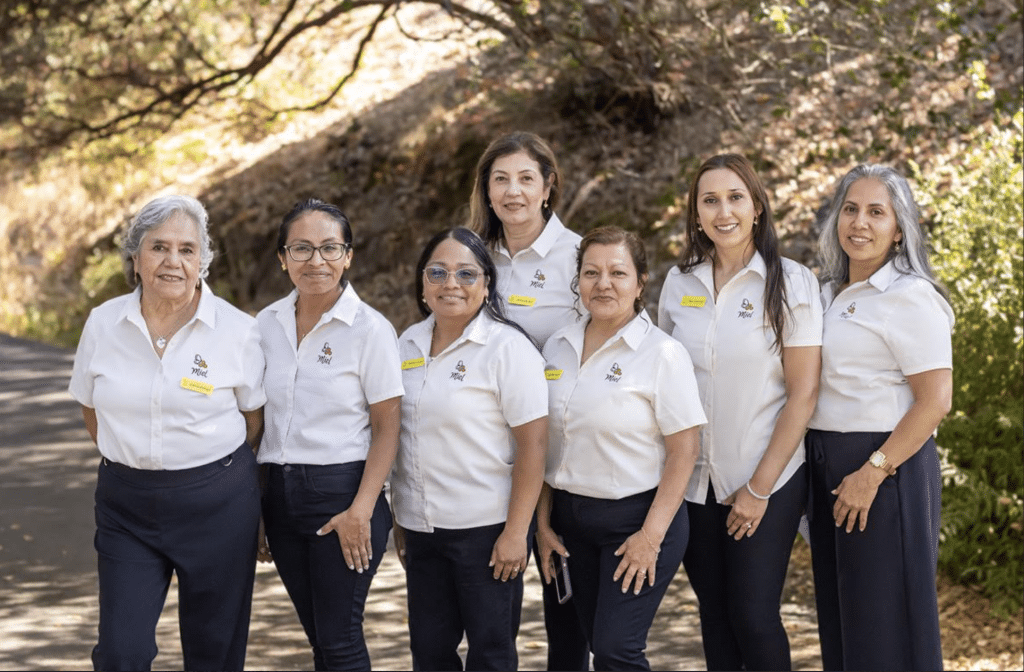
The term “Promotora Workers Cooperative” refers not to a single business but to a broader model of worker-owned organizations formed and led by promotoras. In Calistoga, this local effort has taken shape as the Miel Promotora Community Health Workers Cooperative.
For Pimentel, who immigrated from Michoacán, Mexico, the idea of compensation for her community work once felt far-fetched.
“We’ve always volunteered out of love, to make sure our people get the help they need,” she said in Spanish during an interview with Napa Valley News Group. “For our work to finally be recognized and compensated is a huge deal.”
The cooperative was born out of years of collaboration between local nonprofits and LCF’s Just Recovery partners, a regional network created in 2017.
“Over the years, our nonprofits have relied on volunteer promotoras as organizers working alongside us to reach isolated and underserved community members with vital health and safety information and resources,” said Jenny Ocon, executive director of UpValley Family Centers.
Under Ocon’s leadership, UpValley Family Centers has played a pivotal role in nurturing the initiative. The organization is incubating the cooperative, helping it design governance structures, set up bookkeeping, marketing systems, and access grants that cover initial start-up costs while the group builds its client base.
“We have recruited, coordinated, trained and worked alongside volunteer promotoras for more than 15 years,” Ocon said. “This cooperative business model will finally allow them to be fairly and equitably compensated for the essential work they do.”
After the devastating 2017 wildfires, promotoras became frontline responders, delivering information and resources to suddenly displaced vineyard workers and immigrant families. According to LCF, Latinos represent nearly 70% of the vineyard and agricultural workforce in Napa and Sonoma counties.
LCF notes that despite playing this vital role, promotoras have historically been “excluded workers,” lacking access to benefits, protections or compensation for their time.
Cooperative members will serve as co-owners, contracting their services to nonprofits and health centers through a sustainable, worker-led business structure.
The shift marks a significant departure from the unpaid, often invisible service of promotoras in California communities. By formalizing their work, the initiative acknowledges not only the critical role promotoras play in Latino and immigrant communities but also their own right to economic security, Pimentel added.
For Pimentel and her peers, it is the culmination of years of unpaid labor now transformed into a path toward financial independence and leadership.
“We never imagined this would happen,” she said. “Now, we are being seen while we serve the often unseen.”