Government shutdown is about protecting affordable health care, Thompson says
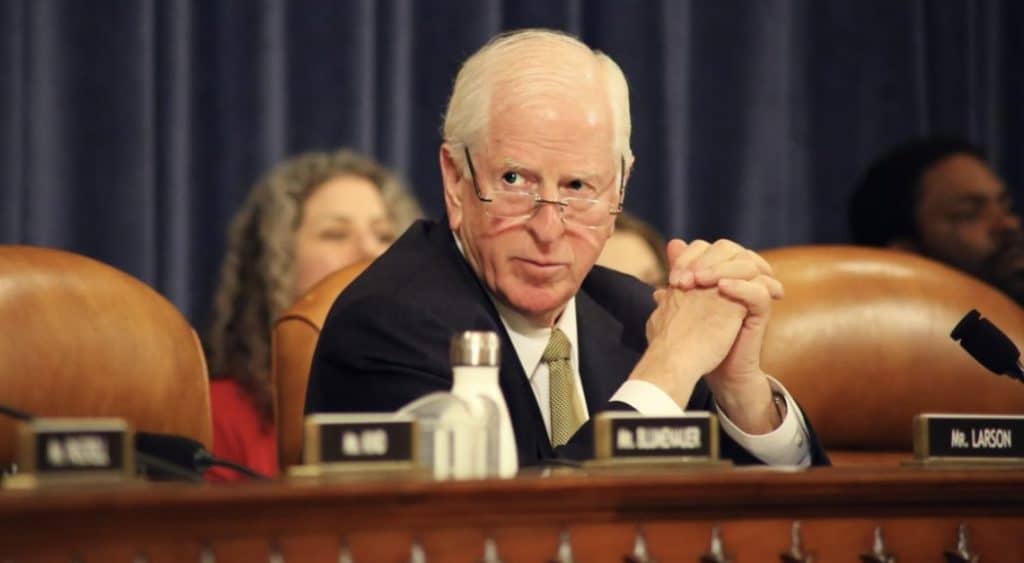
Photo credit: mikethompson.house.gov.
As the federal government shutdown enters its 8th day, its ripple effects are being felt across the nation from the threat of mass layoffs to growing uncertainty over the affordability of health care and renewed political finger-pointing over immigration.
At the heart of the standoff lies a dispute between congressional Democrats and Republicans. GOP leaders have accused Democrats of forcing the shutdown in an effort to expand health care coverage for undocumented immigrants, a claim Rep. Mike Thompson (D-St. Helena) and other democratic leaders have flagged as an “outright lie.”
“We’re hearing from our Republican colleagues and from the White House that this is all about making sure undocumented immigrants don’t get free health care,” Thompson said Thursday during a town hall with Rep. Lauren Underwood (D-Ill.), who is also a registered nurse.
“I’ll be very blunt, anybody who tells you that, is full of prunes,” he said. “By federal law, undocumented immigrants are not allowed to get federally funded health care. This has nothing to do with them.”
Thompson, who is seeking reelection next year, said the real issue is protecting affordable health care for working families and not undocumented immigrants.
The Working Families Tax Cut Act, signed into law in July and dubbed the “One Big Beautiful Bill, ” is at the center of the impasse. Democrats argue the measure delivers massive tax breaks to billionaires while slashing healthcare funding to pay for them.
The GOP insists the new proposal prevents undocumented immigrants from receiving government health benefits though such individuals are already ineligible for Medicaid and the Affordable Care Act (ACA) under existing law.
Here in Napa County, the shutdown comes at a time when the local health care system is already under stress.
Roughly one-third of residents in California’s 4th Congressional District — which spans Napa County and parts of Sonoma, Lake, Yolo and Solano — depend on Medicaid for their health coverage, leaving the region particularly vulnerable to the proposed cuts and cost hikes. Under the Republican-backed proposal, a family of four earning $130,000 would see their annual health care costs rise by $14,000, while a 60-year-old couple earning $80,000 would pay $24,000 more each year.
Aetna, a subsidiary of CVS Health, announced it will withdraw from all individual and family health plans nationwide by the end of the year. The move affects policyholders in the county and throughout the state, where Aetna offers plans through Covered California.
According to company statements, Aetna cited persistent financial losses, rising medical costs and policy instability as reasons for its exit. Executives said the line of business has “no near- or long-term pathway to profitability.”
Affected residents must switch insurers during the next open enrollment period.
The County of Napa has about six community health clinics serving low-income and uninsured populations, along with four major hospitals including Queen of the Valley Medical Center, Napa State Hospital and Adventist Health St. Helena that provide acute, psychiatric and specialty care.
“Fortunately, we have not had any disruption to our services and will continue to be open as usual to serve our patients,” Alicia Hardy, chief executive officer of CommuniCare+OLE clinics told The Napa County Times. “That said, the outcome of the current budget negotiations and whether the enhanced premium tax credits are preserved will significantly impact access to coverage for our patients and our community at large.”
But the discussion over health care access stretches beyond clinic operations. For many in Napa County’s workforce, especially undocumented residents, the debate ties directly to their contributions and inclusion in the nation’s social safety net.
Undocumented workers contribute significantly to the nation’s finances: “They contribute about $25 billion a year to Social Security, even though they’re not eligible to receive benefits,” Thompson said. “They help strengthen the system; they don’t take from it.”
As the shutdown drags on, delays in reaching a bipartisan funding agreement could deepen the strain on health care systems already under pressure and raise costs for working families.