Napa County Master Gardeners: There’s no limit to what being in nature can do for you
A walk in the park, a pause at a window overlooking your garden or a day at the beach. We all know these are rejuvenating moments. But why? What happens in the brain to make them so? What are the chemical and physiological functions in your brain during these experiences?
Until about 200 years ago, humans lived alongside all other creatures – outside. We went indoors for sleep. We foraged, hunted, cooked, worked and played outdoors.
Our brains are wired for this connection with nature. Being indoors is evolutionarily meant for protection from dangers such as sabretooth tigers, enemies and weather.
This innate desire for the outdoors is known as biophilia, meaning that we are wired to feel affinity with nature and are attuned to its rhythms. So, the next time you feel like disconnecting, think instead that you are in turn connecting – with nature.
Our brains produce a chemical known as brain-derived neurotropic factor, or BDNF. This signaling molecule, sometimes called neuron’s fertilizer, serves an important function in the hippocampus, the area of the brain responsible for learning and memory. When we exercise, this chemical is stimulated, which in turn stimulates learning and memory.
Exercising outdoors, as opposed to inside your home or at a gym, provides a double whammy. The areas of our brain that respond to nature are stimulated, which creates a sense of being at peace with our surroundings, while the exercise increases BDNF levels.
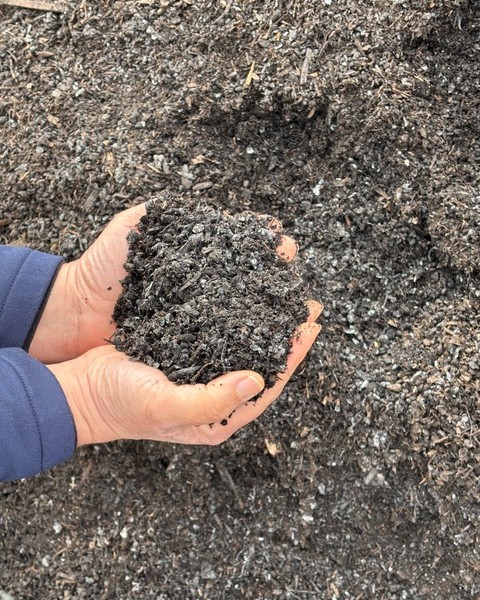
Both the human brain and the soil are composted of intricate networks. Our brain relies on many parts to complete a single task. Neurons and many other cells use pathways to send messages to and fro. In the soil, protozoa, fungi, bacteria and other living beings provide a network between plants. They grow and contract to transport nutrients, water and information from plants that don’t need them to those that do.
Some studies suggest that living in a green environment is better for the brain. The Green Heart Project reported improvement in the cognitive skills of young people after they planted thousands of trees in their neighborhoods. Young people in neighborhoods with few trees did not show the same cognitive improvement.
One Finnish study suggests that we may be too clean. If we don’t expose ourselves to nature enough, we don’t benefit from its healing properties. One such natural healer is Mycobacterium vaccae, a soil-derived bacterium known to stimulate production of serotonin. This neurotransmitter, found in the gut and the brain, is responsible for feelings of satiety and well-being. It also contributes to a healthy immune system.
Don’t stop at green, though. Why are we drawn to moving water, like ocean waves and waterfalls? So we can pick up negative ions, of course. The air around moving water is highly charged with negative ions, considered nature’s air filter. When we inhale them, they positively influence neurotransmitters, boost cell metabolism, improve immune performance and trigger beneficial biochemical processes within the body.
As you consider the hours you need to spend in the garden this weekend, don’t worry; you won’t overdo it. The brain also has a natural inhibitor called galanin that will modulate all that BDNF you produced.
There’s no limit to what being in nature, and especially moving in nature, can do for you. And your thoughtful influence on nature, by using integrated pest management practices, is what you can do for it in exchange.
Tree Walk: Take a guided walk through Napa’s historic Fuller Park on Sunday, Oct. 12, from 10 to 11:30 a.m., with a UC Master Gardener docent. Discover some of the many exotic and native trees there and learn some park history. Meet at the corner of Oak and Jeffereson Streets. The walk is free but registration is required for each participant.
Fall Clean-Up: Join UC Master Gardeners for the annual fall clean-up at the Las Flores Learning Garden on Sunday, Oct. 25, from 10 a.m. to noon. The garden is at 4300 Linda Vista Ave. in Napa. We’ll be putting gardens to bed for the winter. Learn healthy gardening practices by working alongside Master Gardeners in the low-water, native, pollinator and succulent gardens. Register here.
Help Desk: The Master Gardener Help Desk is available to answer your garden questions on Mondays and Fridays from 10 a.m. until 1 p.m. at the UC Cooperative Extension Office, 1710 Soscol Ave., Suite 4, Napa. Or send your questions to mastergardeners@countyofnapa.org. Include your name, address, phone number and a brief description of the problem.