New Fair Farm to premiere at the Napa Town & Country Fair
When Napa Valley Expo CEO Corey Oakley began his job four years ago, he drew upon two things: his long career in the fair and carnival business and his agricultural roots.
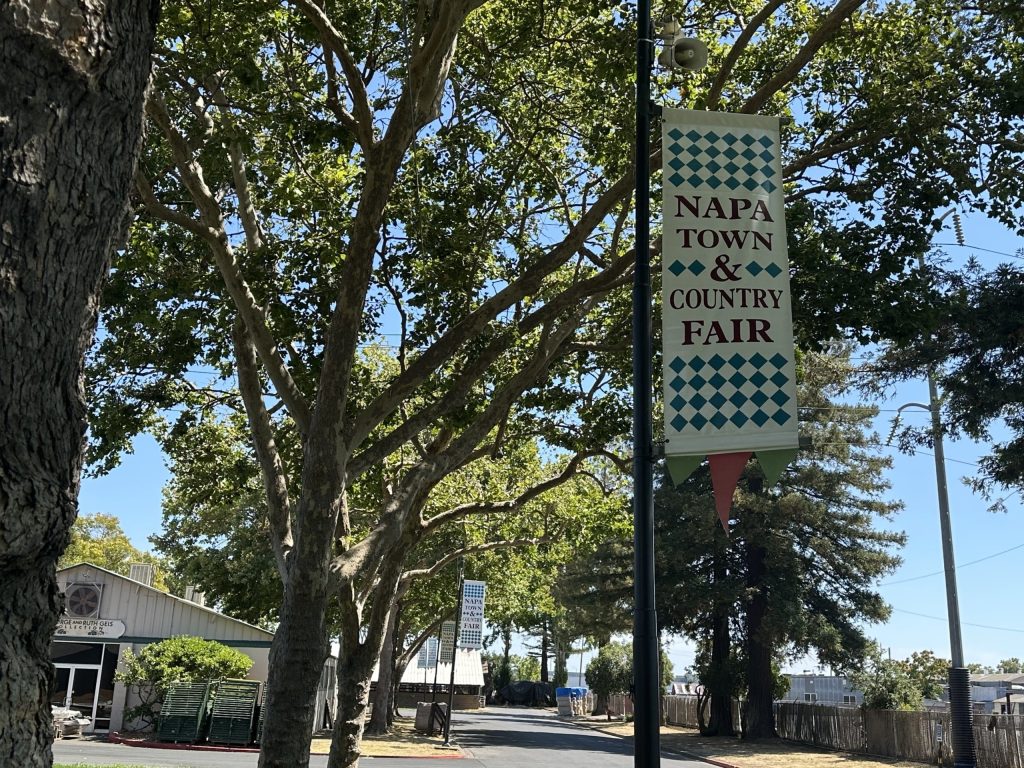
As part of the job, Oakley is again at the helm of the Napa Town & Country Fair, which is set for Aug. 7–10 at the Expo. Established in 1930, Napa’s annual fair is one of many across the country that began as an agricultural event and exhibition.
According to the International Association of Fairs & Expositions, the core elements of those agricultural society events of the early 1800s – those early fairs – are at the heart of the agricultural fair in North America today. Competition for the best agricultural and domestic products of the region combine with an annual celebration for the community to come together, share and learn.
“The first fairs were just gatherings of farmers to compare whose lettuce, bull, pig, sheep, radish, potato, you know, whatever they had raised or grown that was better than the other guy,” Oakley said. “It was no more than a picnic for bragging rights to who did what better. That’s nexus of all of it. It has evolved into a business and evolved into a lot of different things all over the country, in different places.”
Oakley raised, showed and sold animals at fair auctions while growing up in Sonoma County before spending his entire career in the fair business, eventually rising to the executive level. He has been in charge of some of the most significant fairs in California including the San Bernardino County National Orange Show Fair for more than a decade, and Sonoma County Fair in Santa Rosa.
From the start of his role in Napa, along with the Napa Valley Expo board of directors, Oakley recognized that certain aspects of the Napa Town & Country Fair, conversationally known as the Napa Fair, needed some attention.

Since Oakley has arrived, several aspects of the fair have either been reinvented, updated or refreshed. These include the updating hours of operation, modernizing security, creating the new Makers Market, expanding the live entertainment line-up, adding 100% online ticketing, increasing Spanish language programming and securing for the future the safest and cleanest carnival company in the business.
This year, there was one spot remaining on the 34-acre Expo property that yearned for some creativity and TLC. The “Fur & Feathers” exhibit, which includes poultry, rabbits and cavies shown by kids in 4-H has long occupied about half of the Expo’s Zinfandel Building.
Due to the avian flu epidemic, which now endangers other animals such as cattle, as well as humans, birds are currently not allowed at fairs anywhere. Having attended the Napa Fair for most of my life, last year I noticed that in that building in particular, things felt a bit sparse. Subtract the chickens and turkeys, and the space would nearly be empty.
Rather than dwell on this challenge, Oakley seized the opportunity and has worked with an innovative team that includes long-time exhibit pros, three UC interns and a partnership with the Napa Valley Farm Bureau to build the new hands-on “Fair Farm” exhibit in the Zinfandel Building, that will both educate and entertain.
Realizing that agriculture is at the heart of fairs, Oakley remarked, “That’s why fairs are different than other events or activities. You’ve got to keep that tradition because that’s what sets you apart. It’s 2025, it’s not 1840. We had to figure out, how do we compete with the phone, TikTok, Instagram and all of those things?”
The Fair Farm has been created for people of all ages and people of today.
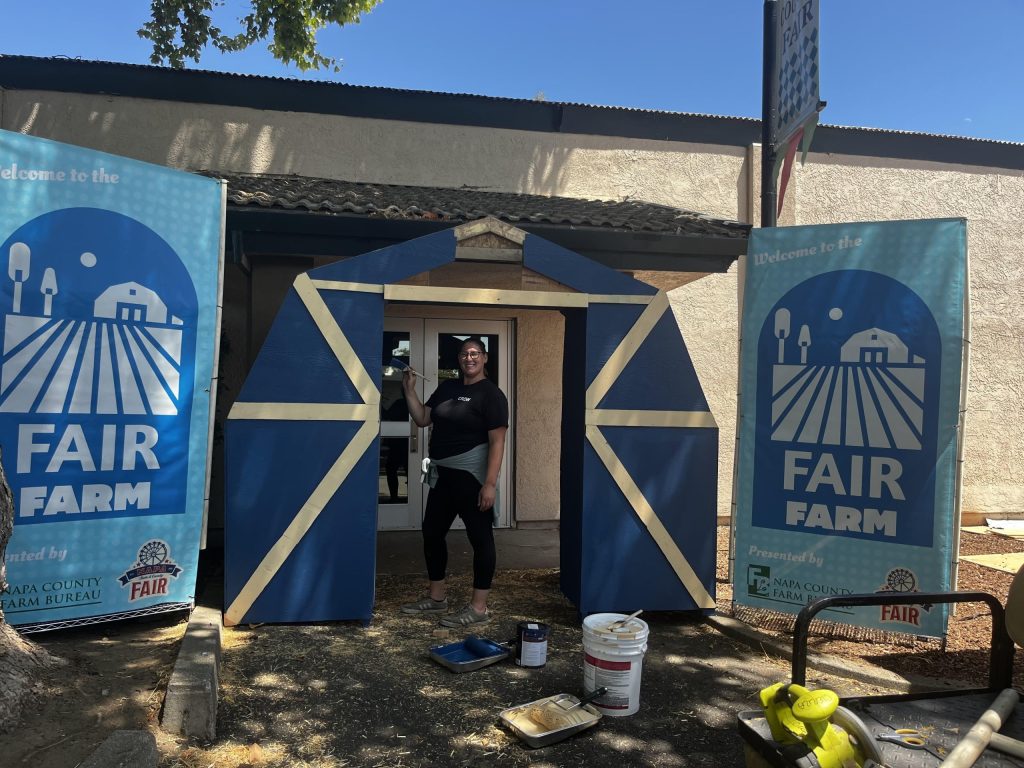
Colorful, tactile, educational, entertaining, environmental and ag-based activities and exhibits fill the new Fair Farm. Just steps away from the roller coaster and cotton candy stand, attendees can experience the farm, entering through the façade of a bright blue barn.
“When you come in, it’s like you are inside the barn or inside the barnyard,” explained Cierra Warner, who has worked on the team creating and building the exhibit. “When you first come in there will be California butterflies and pollinator plants, native local bugs, bees (and) fountains that are examples of how you can build watering stations for bees.”
The Fair Farm will evolve and appear year after year. This inaugural appearance will highlight the unexpected connections between agriculture, environmental stewardship and everyday life, featuring live demonstrations, expert speakers, immersive exhibits and several displays that will provide either photos for family photo albums or Instagram moments.
Fair Farm attendees can also be a “Farmer for Day” and collect eggs from mannequin chickens or practice milking a life-size replica of a dairy cow.
Live small animals, the 4-H rabbits and cavy exhibit will continue as part of this exhibit. The small animal entries nearly doubled this year, according to Warner, who commented that people can have rabbits in their backyards.
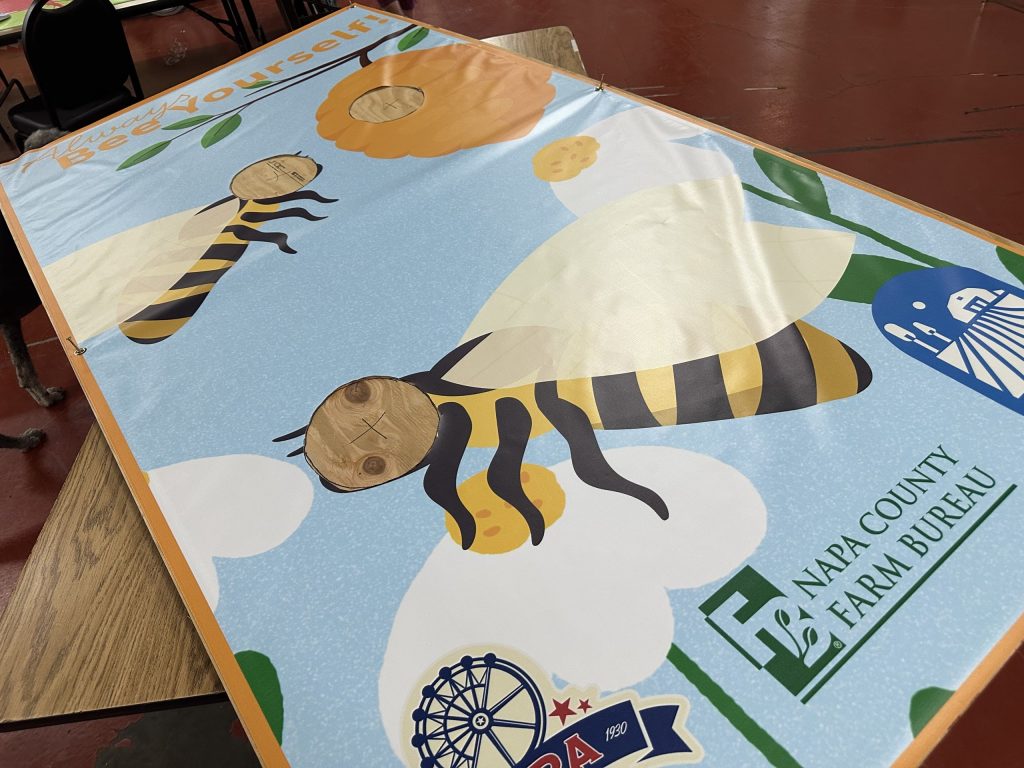
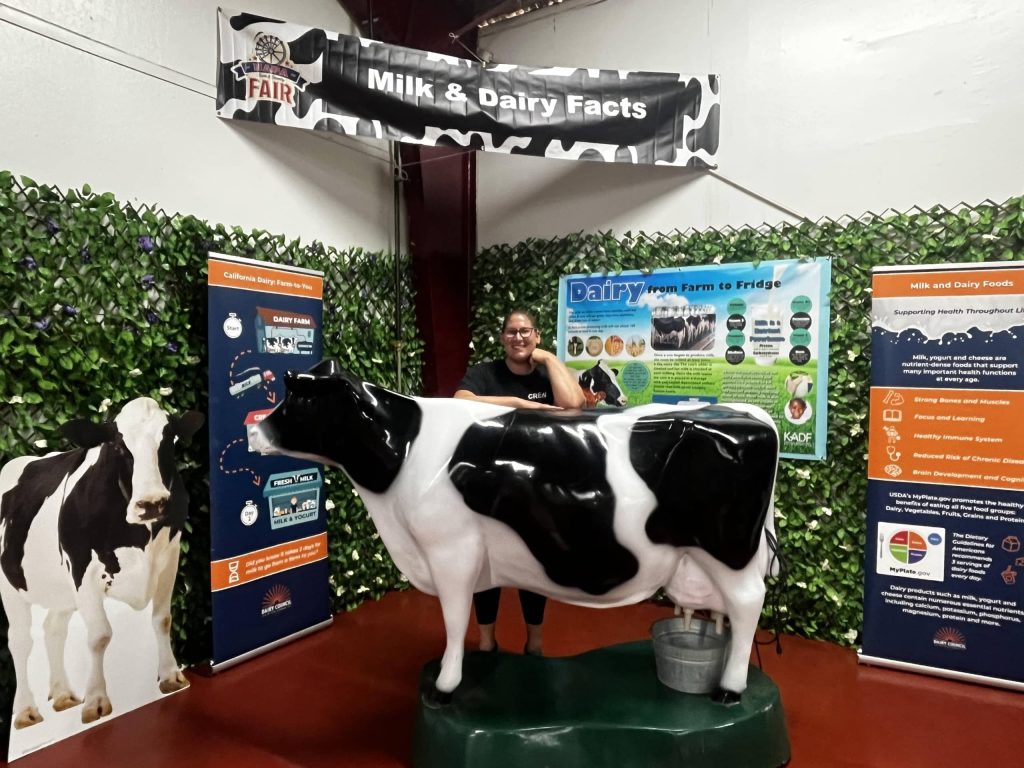
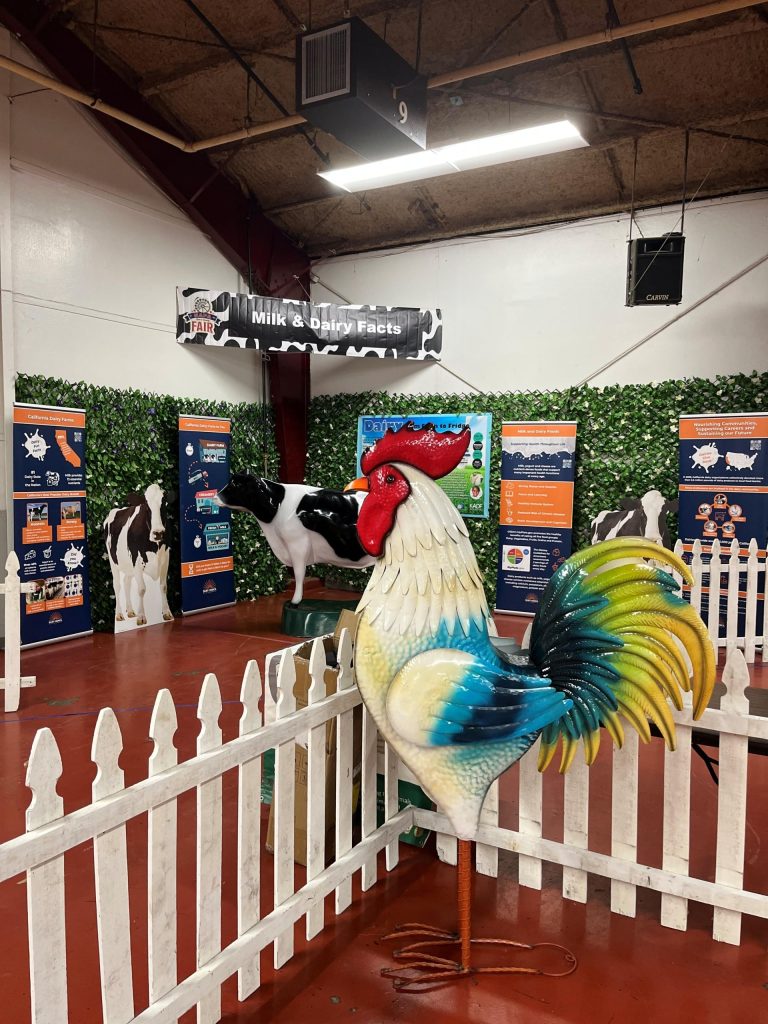
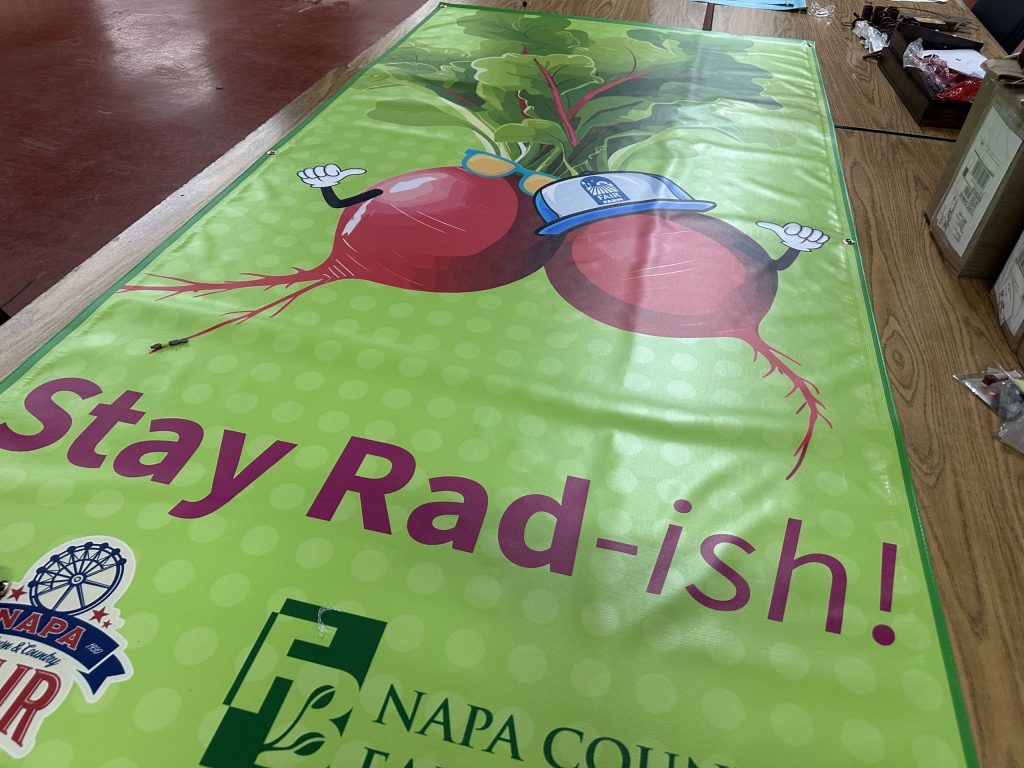
One of her favorite installations is a radish seed planting activity, so that kids can plant a seed in a biodegradable cup to take home, “Radishes grow really fast; kids will have a plant in like 28 days,” Warner explained.
“We live in a pretty rural area. You’ve got ag in your backyard. Even if you have the tiniest backyard in Napa County, you’ve got butterflies, and you have bees and germinating plants. You have fertilizer and things decomposing and dying and helping the soil,” Oakley said. “All of those things exist, whether you see it, you know, or realize it exists or not. So, we’ve got a backyard wildlife area to make those connections for kids and for anybody.”
“Yes, this is for kids, but adults can totally do and learn from all of it,” said Warner who lives on a farm and wants to bring this experience to others.
In addition to the interactive displays, attendees can touch and feel wool, different types of hay, participate in a seedball creation station, view a “Trash to Art” exhibit created by the UC interns, and consume a vast amount of information about farming, the environment, sustainability and living as an eco-friendly member of the community.
The goal according to Oakley, is to make Fair Farm attendees feel as if they were submerged into something really cool and different. The hope is that people will spend some time there, and learn, and walk away thinking, “I had no idea!”
“We are not trying to put you in a classroom when you come to fair; we want you to have a good time. But I think fairs are pretty good at helping you have a good time and learn something too,” Oakley concluded, “So we are trying our hand at that in a different way with this exhibit.”
The Napa Town & Country Fair will be open daily Thursday, Aug. 7 through Sunday, Aug. 10. Tickets are on sale at special pre-fair prices, available at napafair.org. On opening day, Thursday, Aug. 7, all youth, seniors, and active military with ID are admitted free.
Pre-fair specific day tickets are $12 for youth ages 6 to 11 and seniors 62 and older; $14 for ages12 to 61. Pre-fair any day tickets are $15 for youth and seniors 62; $18 for ages12 to 61 years of age. Pre-fair tickets are available until midnight on Aug. 6.
Beginning Aug. 7, specific day entry tickets are $18 youth and seniors and $22 for adults. Any day tickets are $21 youth and seniors, and $25 for adults. Children 5 and under are free every day with accompanying adult ticket holder. On-site parking is available for a fee.
Pre-fair unlimited ride wristbands for the carnival are $35 per person; wristband+WOWXpress are $55 per person until midnight on Aug. 6 at napafair.org. At the fair, unlimited ride wristbands will be $45 per person; wristband+WOWXpress will be $65 per person.
Fair guests are strongly encouraged to purchase entry and carnival tickets prior to the opening of the fair to get the best price.
The Napa Town & Country Fair is at 575 St. at the Napa Valley Expo in Napa. Gates open at 3 p.m. on Thursday and Friday, and 1 p.m. on Saturday and Sunday. There will be no admittance after 9 p.m.