Furry, four-legged friends and plenty of food helped Pickett firefighters
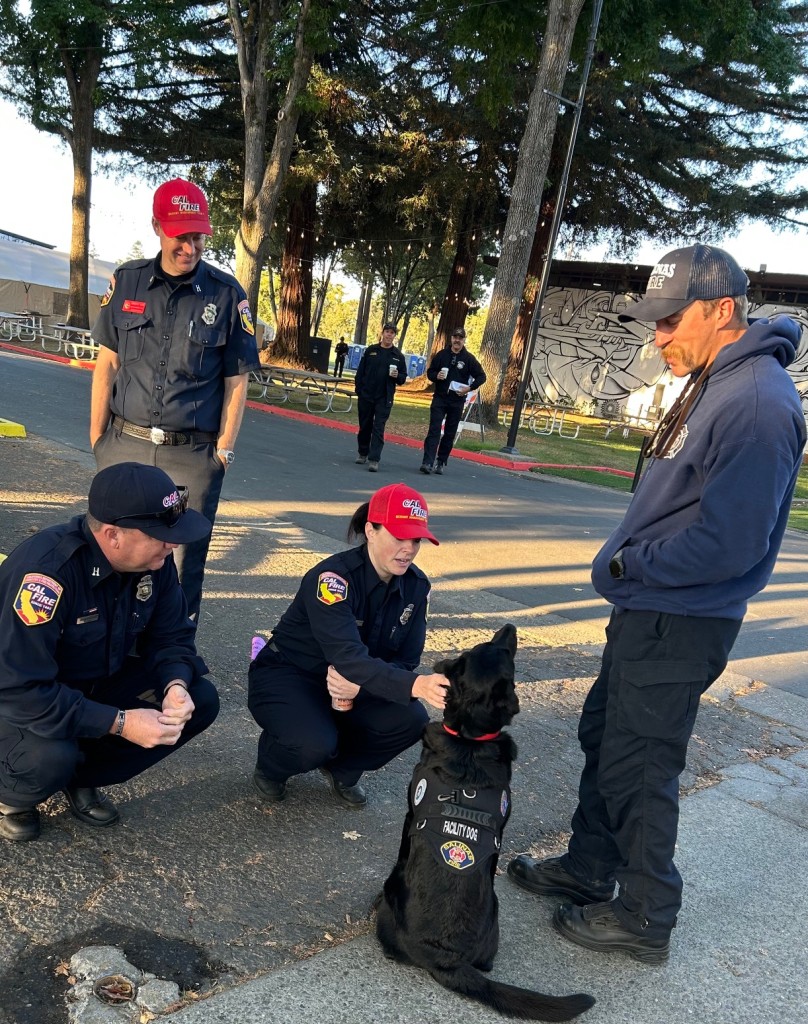
On Monday Sept. 1, Taffy, a facilities dog member of the Salinas Fire Department, was on duty at Napa Valley Expo, as she had been for the past week. Her job? Greeting firefighters as they headed to their work as part of the Pickett Fire response.
A four-year-old black lab and golden retriever mix, Taffy was among the four-legged furry members of Cal Fire’s peer support efforts, whose mission is to give firefighters of all ranks a sense of normalcy away from home.
“She’s a professional,” said her handler, Salinas firefighter Kyle Pletzke from Fresno, as he petted the pooch.
Other dogs assigned to the Pickett Fire, which broke on Aug. 21, included Scout, a Great Dane/Saint Bernard; Birdie, a sheepadoodle; Roger, a golden retriever, and two Australian shepherds from Corning: Blitz, a ten-year-old veteran, and Rookie, his one-year-old brother still in training.
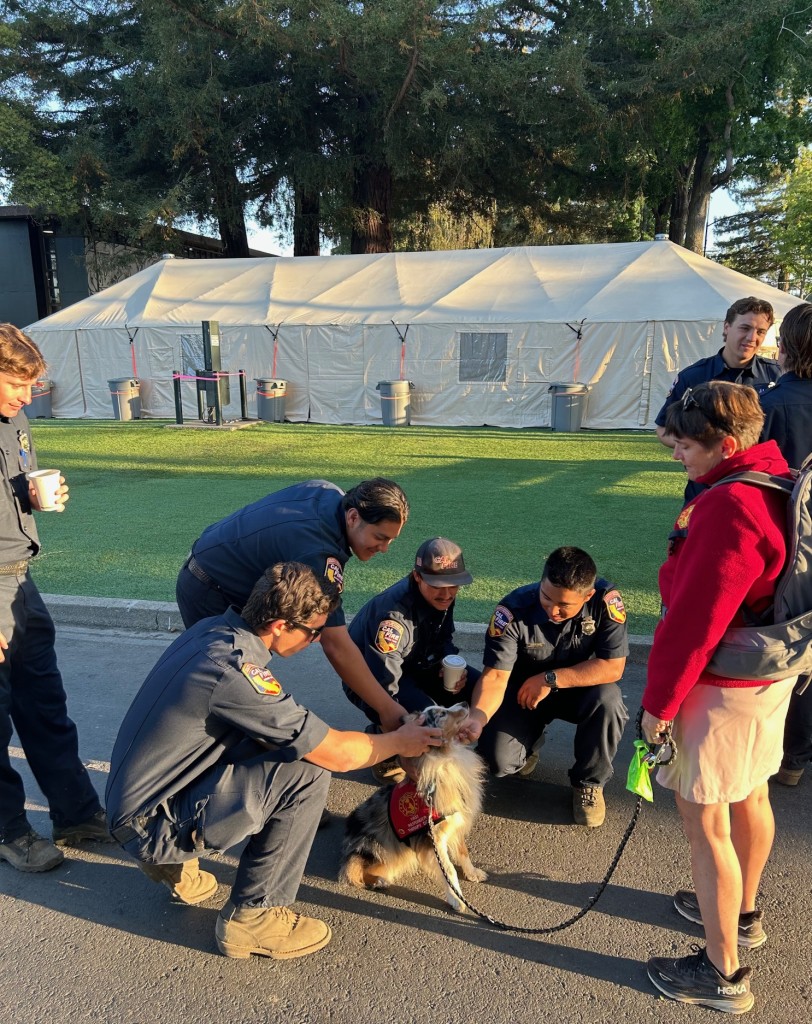
Most of the dogs came as part of First Responder Therapy Dogs, a Marin County volunteer organization that sends volunteers and their trained dogs to fire incidents. Cal Fire’s Incident Management Team 4, the statewide strike team, invited the group to Napa County.
The dogs help bring tensions down, Cal Fire Battalion Chief Robert Velasquez said on Friday. It gives firefighters a break, even for ten seconds, he said.
“It helps bring their stress down so they can make better decisions,” Velasquez said. The dogs, he said, are a “great, great asset.”
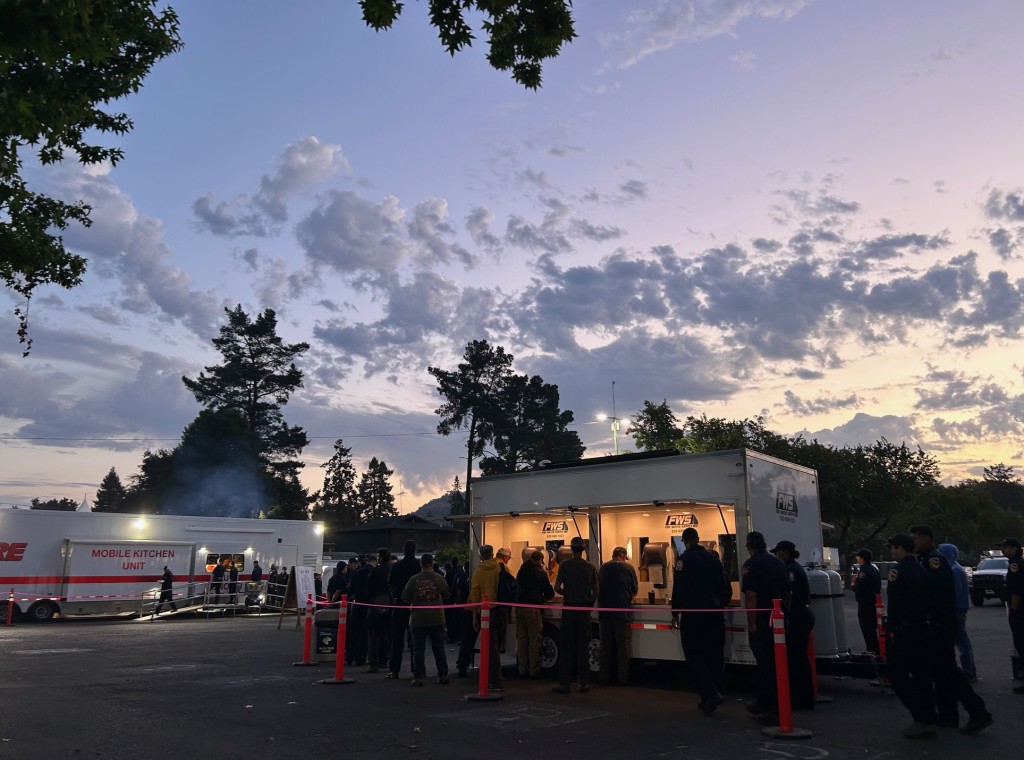
Support services provided to firefighters based at Napa Valley Expo also included laundry, lost-and-found, mail and food. Lots of it.
A team of inmates from the California Department of Corrections and Rehabilitation Konocti Conservation Camp served breakfast and dinner, including a chicken and waffle breakfast, as weary firefighters arrived after getting off the line.
Jesse McGuire, a Cal Fire food unit leader, said the hand crews had been digging a ditch around the 6,000-acre fire in steep terrain, “so we’ve got to fuel them.”
Studies indicate the men, weighing 160 to 180 pounds, burn 6,000 calories a day.
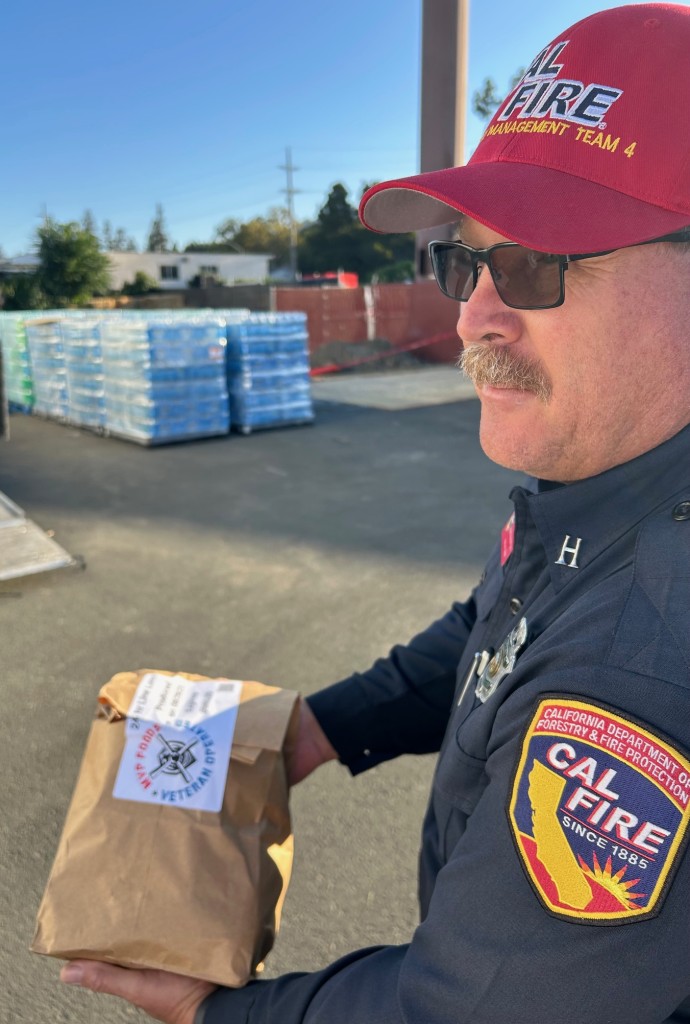
California Conservation Corps members from Fortuna handed departing firefighters five-to-six-pound “lunch” bags. Firefighters also have access to pallets of water and ice.
The lunch bags, prepared by a private contractor, included a sandwich and a burrito, electrolytes, celery sticks and baby carrots, and an apple and orange, as well as snacks and beef jerky.
The food unit wants to provide high quality foods that meet nutritional needs and are easily digestible, McGuire said.
“They’ll eat the whole thing,” he added, as young firefighters picked up their lunch bags.