Napa’s 2025 grape crush: a low yield but not as small as anticipated
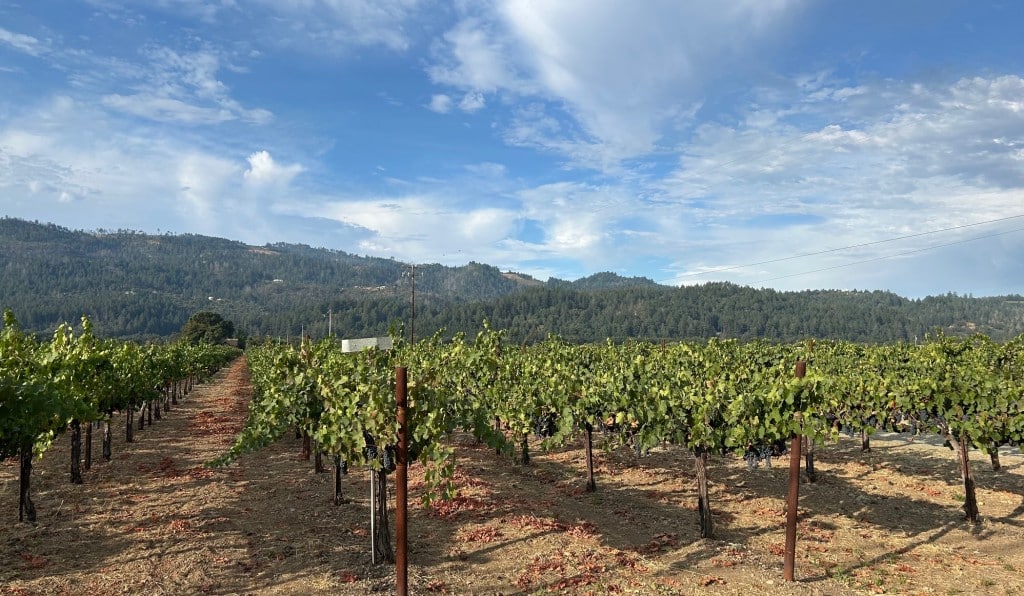
California’s 2025 winegrape harvest was the lightest in more than two decades, according to the California Department of Agriculture’s preliminary grape crush report released on March 13. The crop was nonetheless not as small as expected as the wine industry continues to struggle with a glut of unsold wine.
It reports that California crushed about 2.6 million tons of wine grapes in 2025, down 8.5 % from 2024. It was the smallest crush since 1999. The final report is due later this year.
Statewide, the average price for wine grape was $987 a ton, down 1.6% from 2024, according to the data. Napa’s 2025 crush totaled about 144,000 tons, down 2.2 % from 2024, with a value of $959.5 million.
Overall, grape prices were down 2% to 3%, said Glenn Proctor, partner at Ciatti, a bulk wine and grape brokerage firm based in Novato.
The 2024 crop was valued at $1.0 billion, the Napa County Agricultural Commissioner’s office reported in May.
Napa’s grapes still fetched the state’s top prices, about $6,660 per ton in 2025, down 3.4% from 2024, according to Ciatti.
Napa’s 2025 crush was bigger than anticipated. Large growers and vineyard managers had expected 100,000 tons would be crushed in 2025, Proctor said.
The wine industry has estimated that about 20 % of Napa’s crop was unharvested in 2025. In addition, about 3,100 vineyard acres were removed between October 2024 and August 2025, according to an analysis sponsored by the California Association of Winegrape Growers.
“If we picked all that fruit, you’d argue that this was probably a bumper crop,” Proctor noted.
Napa growers had to deal with rain that shortened Cabernet Sauvignon’s growing season. Some growers chose to file for crop insurance, Proctor said.
Napa’s biggest wine grape crop remained Cabernet Sauvignon in 2025. The crush totaled 77,462 tons, only slightly lighter than in 2024, according to Ciatti.
Cabernet Sauvignon’s average price was $8,864 a ton, 1.6% lower than in 2024.
Growers did take $5,000 to $6,000 for a ton Cabernet Sauvignon late in the year, Proctor said, noting that there were also a few deals for $2,000 a ton for Napa Cabernet Sauvignon.
About 12,400 tons of Sauvignon Blanc were crushed in Napa County,slightly up from 2024, according to Ciatti. Sauvignon Blanc’s tonnage up statewide as well, Proctor said.
Merlot’s crush tonnage in Napa County was down 8% while Chardonnay’s was down 2.6%. Pinot Noir’s crush tonnage totaled about 6,900 tons, slightly up from 2024, Proctor said.
A ton of Cabernet Franc averaged $12,161, while a ton of Pinot Noir averaged $2,872 and a ton of Merlot, $4,914. In addition, the price of Sauvignon Blanc was $3,125 a ton and Chardonnay, $3,613 a ton, according to the crush report.
The pricing data for Napa reported in the crush report did not surprise Jeff Bitter, president of Allied Grape Growers, a statewide wine grape cooperative with about 500 members.
“Existing contracts generally kept average prices up, and since there were not significant tons purchased at extremely low prices (instead grapes were left unpurchased), it didn’t drag down the average prices,” he said.
Overall, Napa grower Phillip Lamoreaux, owner of Oak Knoll Ranch, a 100-acre vineyard, said the crush report was “great news.”
Still, he noted that the modest decline in prices may be due because the lowest-priced grapes were not picked.
Others were surprised.
Vintner Dario Sattui, founder V. Sattui Winery and owner of Castello di Amorosa, said pricing for Cabernet Sauvignon was too high.
Ivo Jeramaz, winemaker and vice president of vineyards and production at Grgich, was also surprised at the price per ton of Cabernet Sauvignon.
Unlike other grape growers, however, Jeramaz said the tonnage was about what he had expected. His company farms about 265 acres of vines under production and another 50 acres under development.
“Most growers would say the report works in their favor, due to the average prices reported,” Bitter said, however, he urged “a lot of caution” when interpreting grape pricing included in the crush report.
The report includes average prices of actual grape transactions. It does not include grapes that were not sold, Bitter said.
Statewide, the tonnage of white winegrapes crushed was up 4% due to larger yielding crop, Bitter said. The production of red winegrapes statewide was down 4% despite a larger yielding crop, he said. “That’s because there were more red grapes left unpurchased in 2025 than in 2024, which was clearly not good for growers,” Bitter said.